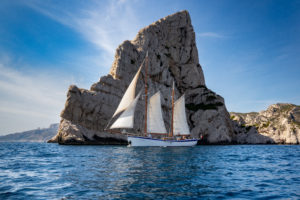

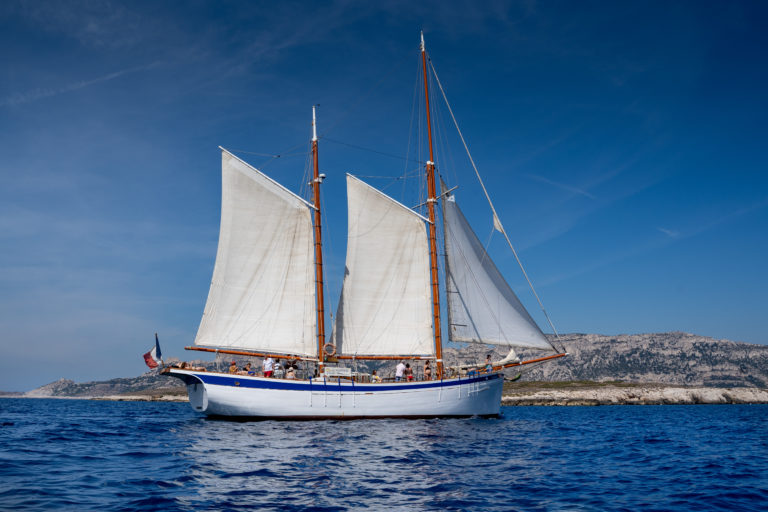
In the world of sailboats, the schooner is a symbol of elegance, speed and versatility. Its many masts give it a graceful silhouette that turns heads on every stretch of water it sails. Having enjoyed a remarkable heyday over the centuries, this type of sailboat has left its mark on the history of sailing and continues to capture the hearts of sailing enthusiasts. Join us as we dive into the fascinating history of the schooner.
Discover our Sailboat rental in Marseille !
The Origins of the Schooner: Between Legend and Reality
While it’s difficult to pinpoint exactly when the first sailboat matching the schooner’s specific characteristics appeared, its origins are generally attributed to the early 17th century, in the Mediterranean region. Some sources suggest that its development was influenced by the xebec, a small, fast and highly manoeuvrable sailboat typical of North African coastal countries. Its French name, “goélette”, however, has its roots in old naval traditions, referring to the goëlette, a small, agile and lively seabird.
The Main Characteristics of the Schooner
The schooner is distinguished mainly by the configuration of its rigging. It is a sailboat with two masts, sometimes three or more, the two main ones being the mainmast and the foremast. It is also characterised by a carefully orchestrated combination of different sails:
- Gaff sails, also known as square or trapezoidal sails, which sit at a wide angle to the horizontal.
- Lateen sails, triangular and asymmetrical, which offer a large sail area for optimised wind capture.
The schooner thus has an alternative rig, combining the two types of sail described above, allowing for easy sailing in all weather conditions. Its sleek hull also gives it unrivalled speed, while its shallow draught allows it to sail even in shallow waters.
The Evolution of the Schooner Through the Centuries
From the 17th century onwards, the schooner established itself as a true maritime phenomenon. It quickly became synonymous with lightness, speed and striking power, making it especially popular with privateers and the military. The schooner also carried out a variety of other missions, such as:
- fishing,
- merchant transport,
- leisure sailing,
- and even racing, where it competed with other, more traditional types of sailboat.
In the 18th century, the schooner began to spread around the world. English sailors, won over by its performance and speed on the water, helped boost its popularity by developing larger versions to carry more passengers and cargo to the emerging colonies. Then, in the 19th century, the schooner became an idealised symbol of modernity, finding both civilian and military uses. Several nations relied on it to strengthen their naval fleets, either as auxiliary vessels or scout ships.
The Decline and Revival of Schooners
Despite its resounding success throughout maritime history, the schooner gradually suffered an irreversible decline, mainly due to the rapid evolution of naval technology and the emergence of new types of motorised vessels such as ocean liners, container ships and modern warships. However, in the 21st century, the schooner has begun a new lease of life, thanks in particular to the growth of leisure sailing. Passionate owners are restoring these vessels, giving them back their iconic place at sea. Setting sail aboard a schooner offers a truly unique experience, combining elegance, history and exceptional sailing sensations.
The Schooner Today: an Undeniable Appeal
In the world of sailing, the schooner continues to hold a special place, thanks to both its rich history and its elegant lines and versatility. On the waters frequented by sailing enthusiasts, it’s not unusual to spot a majestic, multi-masted schooner gliding elegantly across the water, a testament to the timeless charm of this legendary type of sailboat.