
Sailing Tour of the Calanques
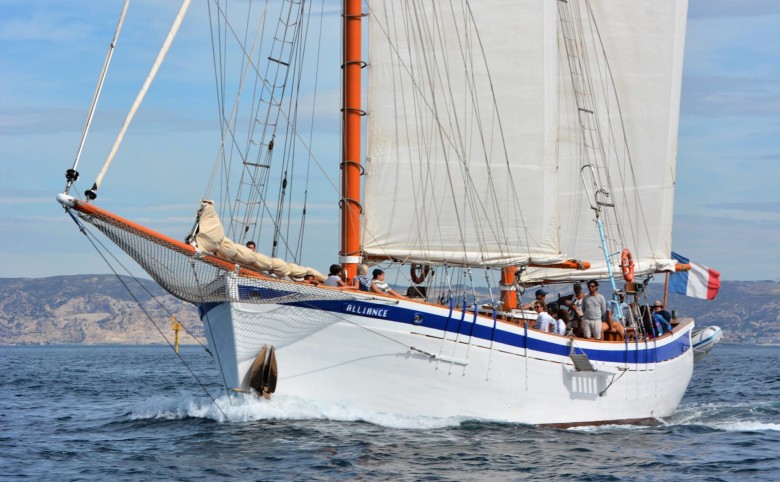
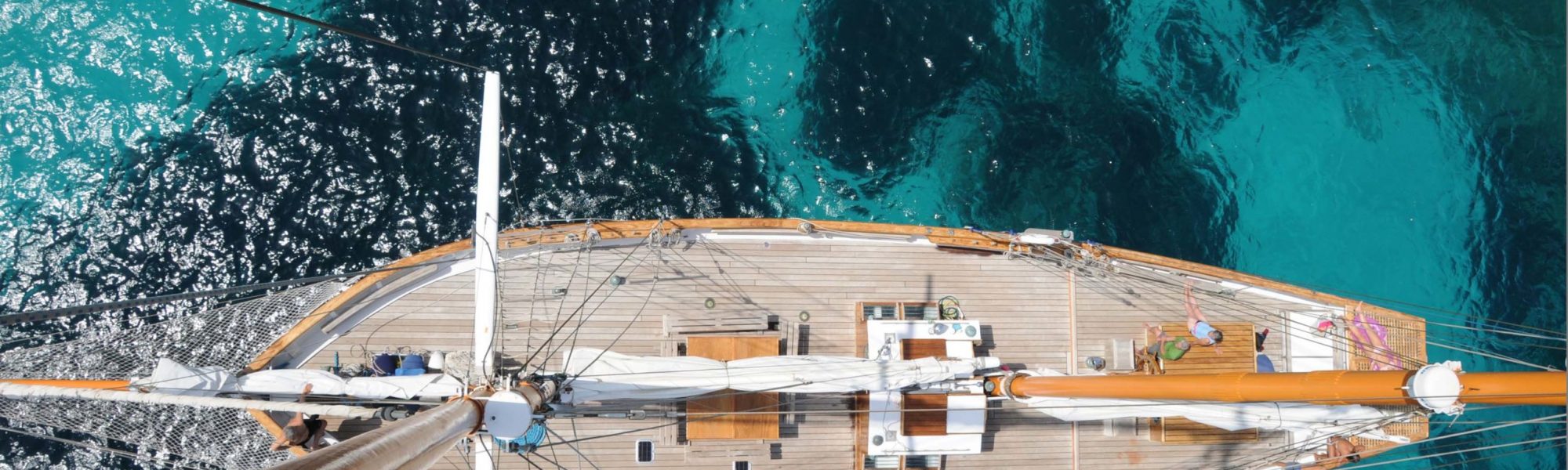
One of your fondest memories of Marseille: traditional sailing aboard the schooner ALLIANCE, built in 1949.
Visit the Calanques National Park, with a stop in a magnificent cove between Marseille and Cassis to enjoy lunch, swimming and relaxing.
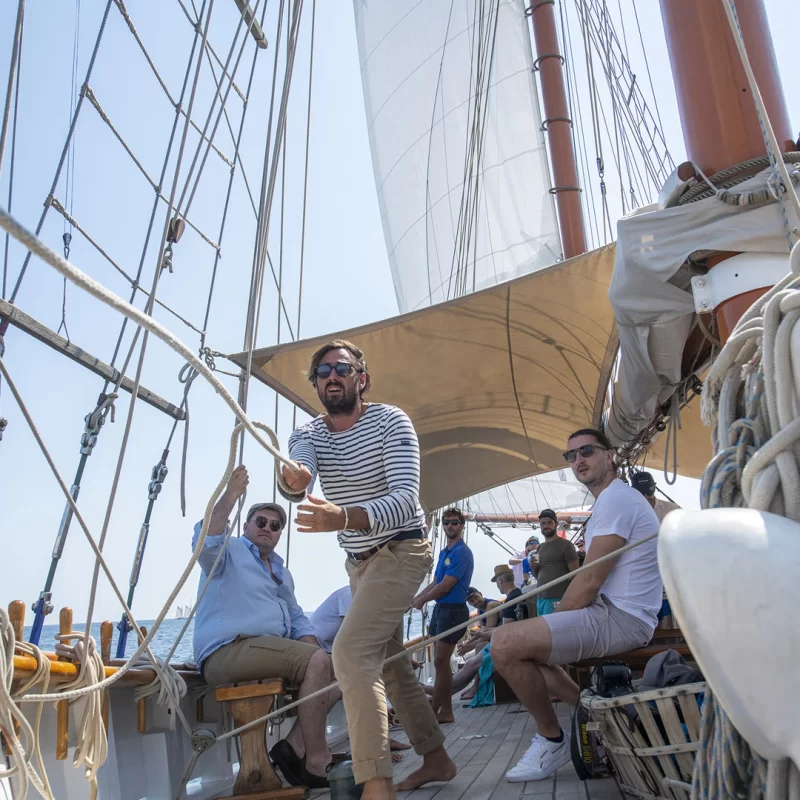
Our crew will be delighted to introduce you to sailing aboard a traditional rig.
Our departures are only confirmed with a minimum of 12 passengers.
Our cruises go on sale between 15 and 20 days in advance. Follow us to find out about upcoming available dates.
Ticketing
Adult €125.00
5 to 12 years €80.00
0 to 5 years €20.00
Meals and drinks are included
PROPOSED PROGRAMME:
10:00 am: Passengers welcomed at the Vieux-Port, near the Ferry Boat landing stage. On arrival, fruit juice and coffee will be offered by the crew to start the day off right.
We set sail across the bay towards the magnificent Calanques of Marseille. Depending on weather conditions, we will drop anchor in a sheltered cove for a swimming break. Masks and snorkels are available for you to explore the seabed.
Onboard, a aperitif A convivial welcome awaits you, along witha glass of rosé chilled, to fully enjoy the moment before moving on to lunch. This vegetarian meal, prepared with fresh, seasonal produce, reflects our commitment to nature while offering a delicious gourmet experience.
After lunch, we will continue sailing with the wind, through the Riou archipelago and other coves of the Calanques.
A second swimming stop is planned if conditions allow, to extend these unique moments in nature.
5:00 pm : Return to the Vieux-Port of Marseille, with a head full of memories after a day of relaxation and adventure at sea.
Subject to change depending on the weather.
Drom the Vieux-Port of Marseille, we cross the southern bay to the gateway of the Calanques.
’La Baie des Singes’ (Bay of Monkeys) is a naturally stunning passage between Île Maïre and Cap Croisette. Our tour continues here in a natural setting, sailing just as the first navigators did when discovering new horizons.
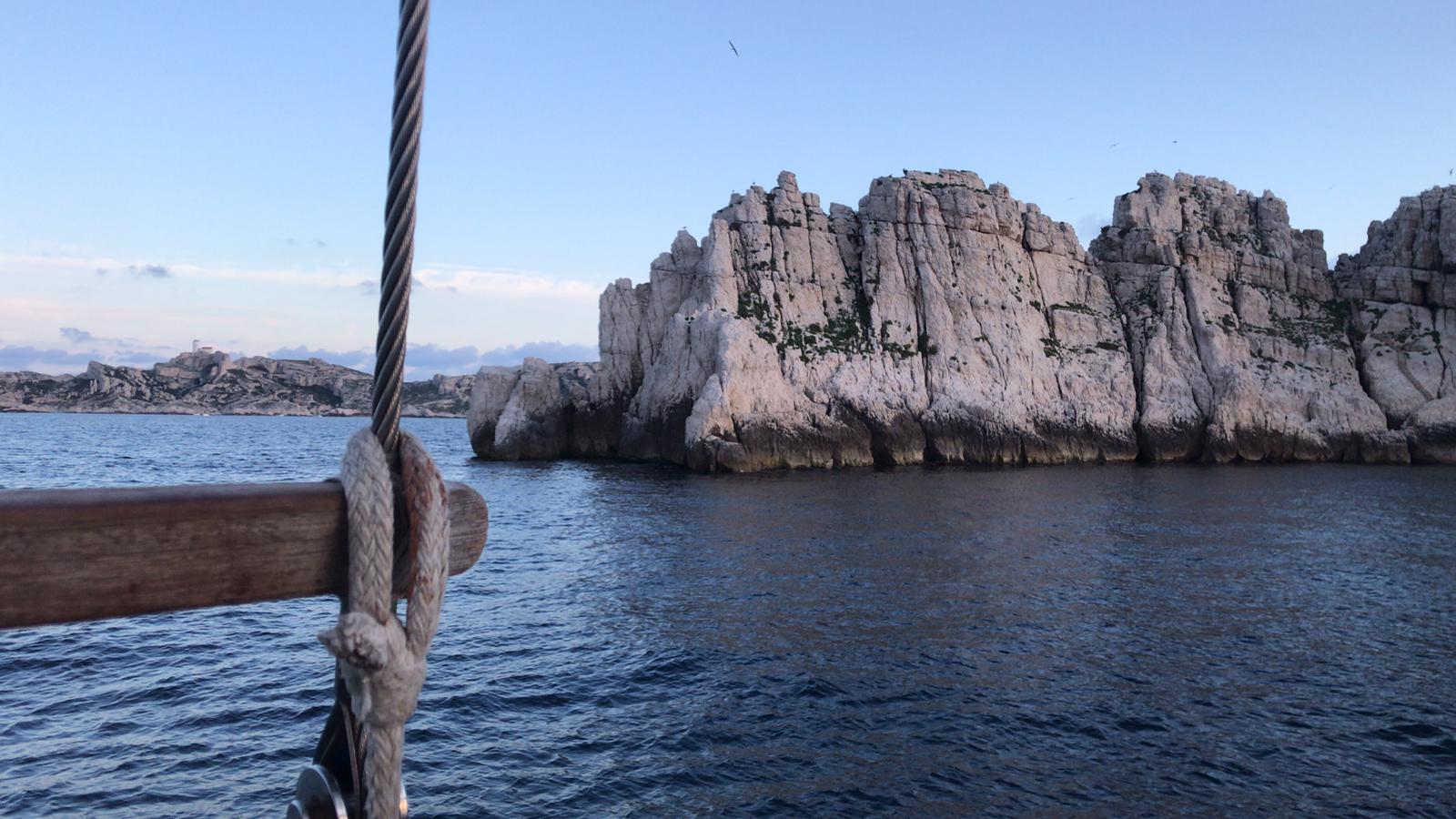
The Calanques of Marseille stretch over more than twenty kilometres of coastline between the village of Les Goudes, a district in the southwestern corner of Marseille, and Cassis. It is one of the most remarkable sites in France, and a major area for natural resources and outdoor activities. These Calanques are the Goélette Alliance's favourite stretch of water. In 2012, the Calanques massif became a National Park, to which the Goélette Alliance has privileged access. The setting is majestic, with limestone cliffs overlooking wild coves and old fishing harbours dotted with cabanons, modest, typically Provençal dwellings.
Beyond the famous Cosquer Cave (now closed to the public), other sea caves feature on our regular routes, such as the Grotte Bleue and the Grotte du Capelan.
The word ’calanque’ (from the Provençal ’calanco’) refers to a valley carved by a river and later reclaimed by the sea.
The countless fossils embedded in the limestone bear witness to a history that began more than a hundred million years ago, with sediment accumulating on the seabed, followed by an uplift during the Tertiary era, when the Alps were formed. Erosion has since deepened the fractures, giving rise to the rugged terrain seen today.
List of Calanques from West to East – Source Wikipedia: Calanque de Callelongue, Calanque de la Mounine, Calanque de Marseilleveyre, Calanque de Podestat, Calanque de l'Escu, Calanque de Sormiou, Calanque de la Triperie, Calanque de Morgiou, Calanque de Sugiton, Calanque du Devenson, Calanque de l'Oule, Calanque d'En-Vau, Calanque de Port-Pin, Calanque de Port-Miou
An exceptional site offering a panoramic view over the entire Calanques massif, from Île Maïre to Bec de l'Aigle.
We will show you a wild landscape within a nature reserve accessible only by boat, and offer anchorage in a special spot such as the Calanque de Monasterio, Fontagne or Pouars.
The National Park has established ’no-take zones’ in this area, where all forms of fishing are prohibited. Today we can see the benefits: the fish observed here are more numerous, more varied, and larger in size.
These islands form a true sanctuary for many rare animal and plant species, and represent a natural heritage recognised at European level.
Île de Riou is also known as the Isle of Birds. It is a site of prime importance for the breeding of French seabirds such as Scopoli's shearwater, the Yelkouan shearwater and the European storm petrel.
The archipelago is also a historic site for underwater archaeology. It was here that Commandant Cousteau and Professor Fernand Benoît organised, from 1952 onwards, the first underwater archaeological excavations directed from the surface. They discovered shipwrecks and their cargoes of Greco-Italic and Roman amphorae, the oldest dating back to the early 2nd century BC.